
end latency is user-facing (interactive agents, synchronous request handling), a persistent worker pool will consistently outperform a container-per-job model. For batch processing, async pipelines, and workloads measured in minutes rather than seconds, cold-start overhead is negligible noise.
The confirmed free developer plan makes Northflank a practical prototyping environment with no budget commitment . Container minute limits on the free tier are consumption-based and predictable: model your workload's per-run minute consumption and project the upgrade timeline before hitting the wall. Capabilities are not gated behind the paid tier — only resource limits change as you scale.
AgentNode Pro: anomaly detection and elastic scaling
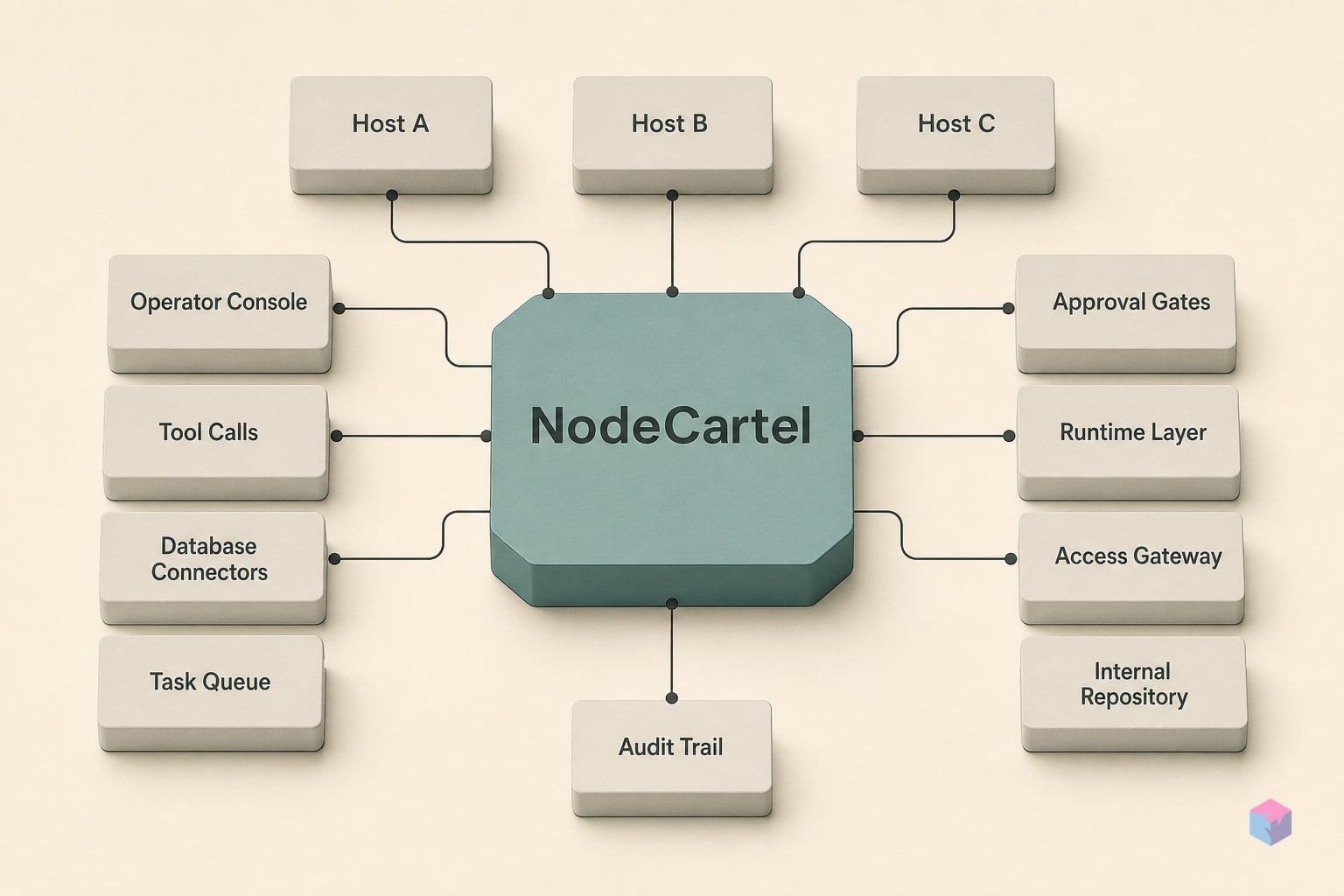
AgentNode Pro's differentiating feature is built-in real-time anomaly detection at the orchestration layer: the platform flags runaway loops and cost spikes before they compound across hosts . For AI workloads specifically, this addresses a failure mode that generic infrastructure platforms do not handle natively — a misbehaving LLM call that loops or over-calls an expensive external API can generate significant overage before appearing in a billing dashboard. AgentNode catches these patterns automatically at the scheduling layer rather than after the fact.
Elastic scaling in AgentNode Pro is driven by queue depth rather than fixed host count. As pending job volume grows, the platform increases worker capacity; as the queue drains, capacity contracts. This model fits bursty AI workloads well — a downstream API slows, jobs queue up, queue depth signals the need for additional capacity, and workers scale out to absorb the backlog. A fixed-host-count model either wastes money at idle or leaves jobs queued during unpredictable spikes, which is a common pattern when LLM response times are variable and downstream API latencies are not under your control.
The observability focus makes AgentNode Pro most defensible in production environments where the cost of a runaway agent job extends beyond compute — downstream API overage, data integrity issues, or customer-facing consequences from duplicate tool calls. Teams with agents making consequential external calls (payment APIs, database writes, notification dispatches) benefit from anomaly detection at the orchestration layer rather than relying solely on application-level guards. This is a meaningful architectural argument for the platform's premium positioning, not just a marketing angle.
Pricing is enterprise-focused with no confirmed public free tier as of June 2026 . A trial is available on request at agentnode.pro, but pricing is not publicly listed. A sales conversation is required before running a meaningful test workload. For teams where observability and cost guardrails are the primary evaluation criteria, that friction is worth absorbing. For teams where $0 entry and fast time-to-test are the primary constraints, start with CrewAI Cloud or Northflank and revisit AgentNode Pro when production cost control becomes the limiting concern.
The $0 option: what each platform offers without a credit card
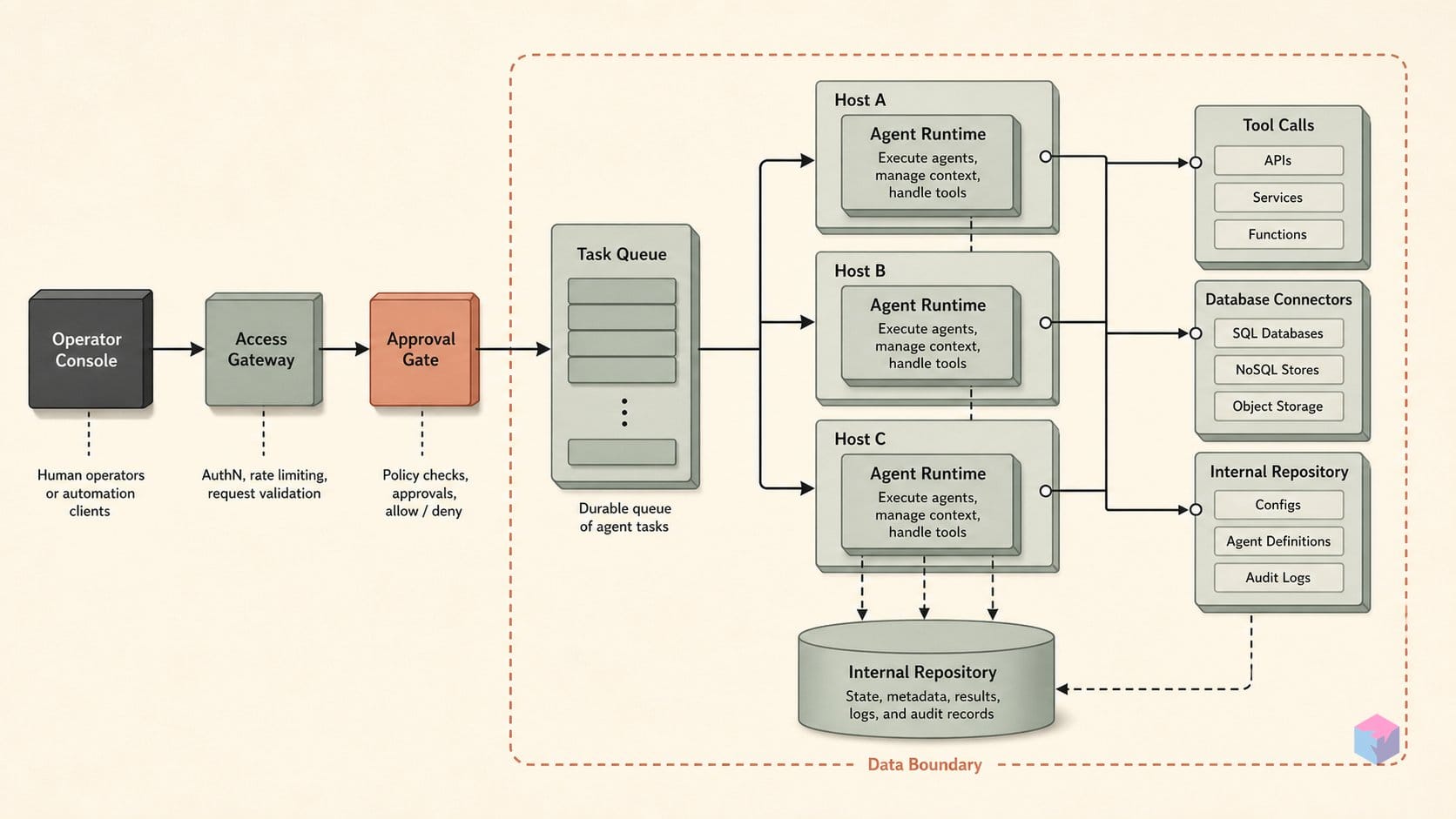
Two platforms in this comparison have confirmed, no-credit-card-required free tiers as of June 2026: CrewAI Cloud and Northflank. Both impose resource limits — concurrent crew caps and container minutes, respectively — rather than time-boxed trials that expire. Kore.ai and AgentNode Pro both require enterprise contact before any trial access is possible, with no self-serve free tier confirmed at either platform . If $0 entry is a hard constraint, your shortlist is two platforms, not four.
| Platform | Free tier confirmed? | Constraint type | Credit card required? | Self-serve sign-up? |
|---|---|---|---|---|
| CrewAI Cloud | Yes | Concurrent crews (~2–3 historically) | No | Yes |
| Northflank | Yes | Container minutes capped | No | Yes |
| Kore.ai | No | API sandbox after sales contact only | N/A — enterprise contact required | No |
| AgentNode Pro | Not confirmed | Trial on request only | Unknown — not publicly disclosed | No |
The distinction between a concurrent-crew limit and a container-minute limit shapes which workload fits the free tier better. A concurrency cap hits when you run multiple agents simultaneously; a minute cap accumulates on total execution time regardless of concurrency. For a workload that runs one agent at a time for extended periods, Northflank's minute cap is the binding constraint. For short-lived, parallel workloads — many agents starting and completing quickly — CrewAI Cloud's concurrency cap becomes the bottleneck first. Know which pattern your workload follows before choosing between the two.
Neither free tier is designed for sustained production traffic at scale. The $0 tier is appropriate for prototyping, proof-of-concept runs, and initial integration testing. Both platforms offer consumption-based upgrade paths: model your workload's resource consumption and project the upgrade point before hitting the wall. The relevant decision threshold is when evaluation volume crosses into consistent production traffic — that is when free-tier constraints become binding and pricing becomes a real input to the comparison.
Choosing by topology: federation vs. centralized scheduler
The choice between a centralized scheduler and a federated governance layer reduces to one primary variable: how many agent frameworks you are running in production today — not how many you plan to run. A homogeneous stack (one framework, one team's codebase) fits a centralized scheduler cleanly: simpler state model, single control plane, traceable debugging, no migration overhead. A heterogeneous stack with multiple runtimes already in production that you did not choose and cannot consolidate fits a governance layer, because the governance layer removes the consolidation prerequisite that a centralized scheduler implicitly assumes.
Centralized scheduler (Northflank, CrewAI Cloud): A single control plane owns job state and scheduling. Debugging is tractable because there is one authoritative source of truth for the job graph. The implicit constraint is framework homogeneity — CrewAI Cloud works best when your agents run on CrewAI; Northflank works best when your workload is containerized and framework-agnostic. CrewAI Cloud is the right choice if you are already on CrewAI OSS and want to offload infrastructure without changing code. Northflank is the right choice if you need framework flexibility, per-job container isolation, or a container-native deployment model without the procurement overhead of an enterprise governance platform.
Federated governance (Kore.ai): No framework migration required when multiple runtimes are already in production. The governance layer applies policy above existing stacks without owning their internal execution. The constraint is procurement speed — enterprise sales motion means slower time-to-test. The use case is specifically large mixed-stack organizations coordinating across three or more agent runtimes that different teams chose independently and have no organizational mandate to consolidate .
A concrete decision rule:
- One framework, already CrewAI → CrewAI Cloud. Self-serve, free tier, no code changes required to deploy.
- One framework, not CrewAI (or fully custom) → Northflank. Framework-agnostic, free developer plan, container isolation included.
- Two frameworks, one team owns both → CrewAI Cloud or Northflank; consolidation to a single runtime is achievable and cheaper than governance tooling.
- Three or more frameworks, multiple teams, no consolidation plan → Kore.ai. Federated governance is structurally the correct fit; consolidation cost likely exceeds Kore.ai's procurement cost.
- Production cost guardrails and anomaly detection are the primary concern → AgentNode Pro, despite the absence of a confirmed free tier.
- $0 entry is a hard constraint → CrewAI Cloud or Northflank. Both have verified free tiers; neither requires a credit card to start.
One clarification worth stating explicitly: the cost floor decision and the topology decision are separate inputs. If $0 entry is the primary constraint, the comparison narrows to CrewAI Cloud vs. Northflank, and reduces further to framework fit (CrewAI-native vs. framework-agnostic). If multi-framework governance is the primary constraint, that drives toward Kore.ai regardless of cost floor — neither Northflank nor CrewAI Cloud is architected to coordinate across heterogeneous runtimes. Conflating the two constraints produces a suboptimal answer to both. Resolve the topology question first; then apply cost constraints within the correct topology bucket.
Frequently Asked Questions
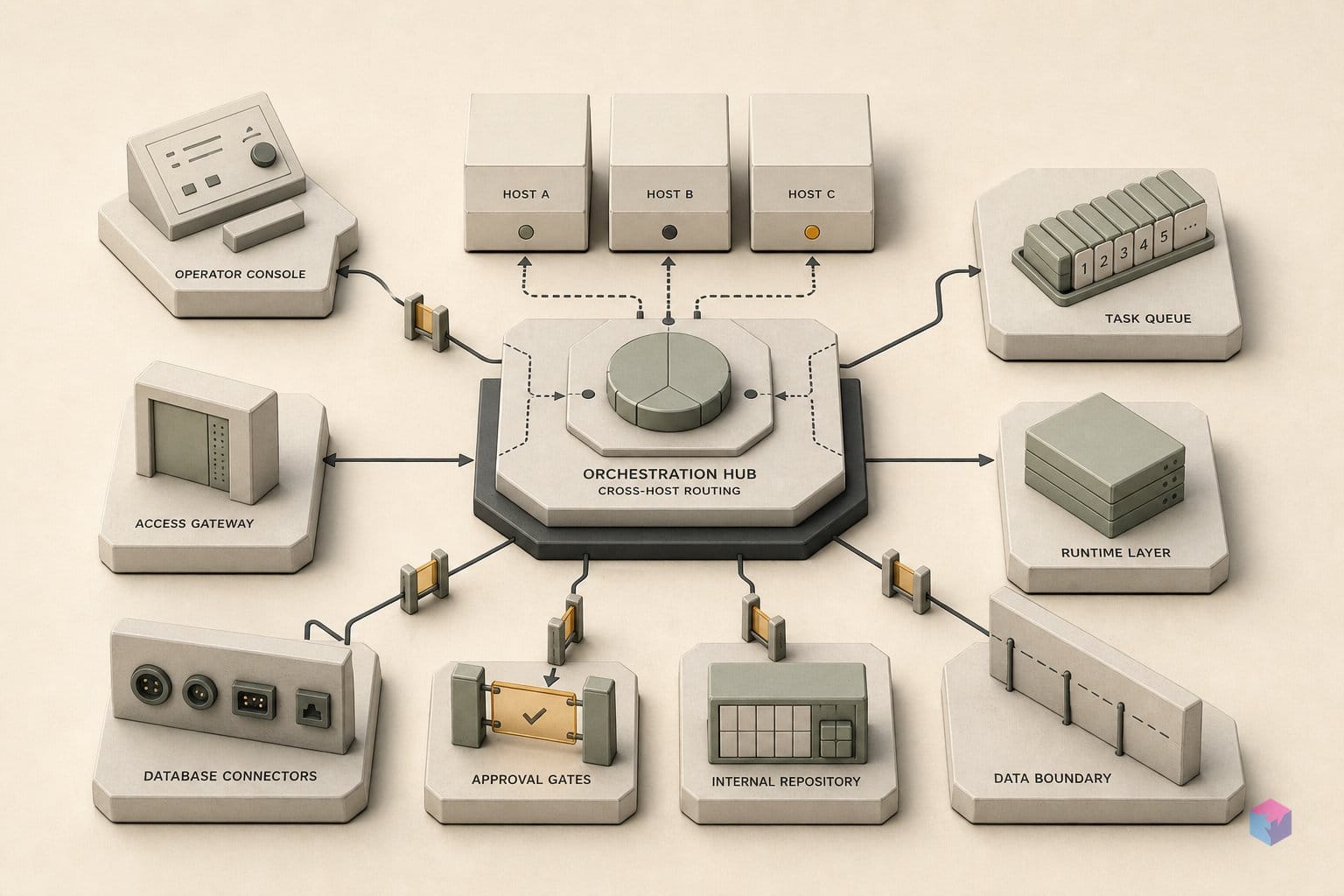
Is NodeCartel a real product?
As of June 2026, NodeCartel cannot be confirmed as a real, publicly accessible product. All three associated domains — nodecartel.com, nodecartel.io, and nodecartel.net — are unreachable: nodecartel.com returns HTTP 403 Forbidden and .io/.net return ECONNREFUSED. A Product Hunt search returns zero results , and no presence exists on GitHub, Hacker News, Reddit, or AI tooling comparison roundups. The product may be pre-launch, invite-only, or operating under a different public name. Do not publish capability claims without a verifiable primary source.
Which cross-host AI orchestration options have a confirmed free tier?
CrewAI Cloud and Northflank both have confirmed developer free tiers with no credit card required as of June 2026 . Kore.ai offers only an API sandbox after a sales conversation — no self-serve free tier . AgentNode Pro offers a trial on request with no publicly confirmed free tier as of June 2026 .
What is the difference between running CrewAI self-hosted vs. CrewAI Cloud?
Self-hosted CrewAI gives full control over compute, secrets, and host provisioning, but requires you to implement retry logic, state persistence, and worker management yourself. CrewAI Cloud handles that infrastructure layer as a managed service. The Python task graph definition — your crew and agent code — stays identical in both deployments; there is no proprietary DSL or re-implementation step when switching between self-hosted and cloud . The self-hosted fallback via the OSS repository remains viable at any point, which makes the migration path bidirectional in practice.
Does Northflank support arbitrary Python-based AI job scheduling?
Yes. Northflank is framework-agnostic: any containerized Python or Node.js job can run as a background worker or cron-triggered task. There is no requirement to use CrewAI, LangChain, AutoGen, or any specific agent framework . You supply the container image; Northflank provides the scheduling, isolation, and execution environment. This makes it a valid base layer for teams building custom orchestration on top of raw LLM API calls rather than higher-level frameworks.
When does a governance layer like Kore.ai make more sense than a scheduler like Northflank?
Use a governance layer when you have multiple agent frameworks already in production that you cannot or have decided not to consolidate into a single runtime. Kore.ai is specifically designed for organizations coordinating LangChain, AutoGen, CrewAI, and proprietary runtimes simultaneously — applying governance policy above the existing stack without forcing migration . Use a centralized scheduler like Northflank when your stack is homogeneous and the need is hosted compute with retries, isolation, and predictable scaling. The governance vs. scheduler distinction maps directly to the heterogeneous vs. homogeneous stack distinction .
What to build on while NodeCartel stays dark
The NodeCartel search came up empty across every index that would normally surface a developer tool at launch. The problem space it was reportedly targeting — managing AI agents across multiple hosts — is well-served by confirmed platforms in mid-2026. The decision is cleaner than it might appear once you separate topology from cost floor: answer the topology question first (one framework or many?), then apply the cost constraint within the correct bucket.
For teams with a single framework and a free-tier budget: start with CrewAI Cloud if you are already on CrewAI, or Northflank if you need framework flexibility. Both are self-serve, no credit card required, and documented well enough to evaluate in a day. For teams coordinating three or more frameworks with no consolidation mandate: Kore.ai's federated governance model is the structurally correct answer despite the enterprise procurement friction — the alternative is paying migration cost that Kore.ai's architecture is specifically designed to avoid. For production workloads where observability and cost guardrails are the primary concern: AgentNode Pro's anomaly detection is the differentiated capability in this comparison, and the absence of a free tier is the entry cost for getting it.
The cross-host scheduling problem will grow in complexity as multi-agent workflows mature. Checkpointing at tool-call boundaries, mid-execution rerouting without side-effect replay, and per-job isolation from untrusted LLM outputs are the engineering problems that separate schedulers adequate for prototypes from those adequate for production. None of the platforms confirmed here fully solve all three simultaneously — which is itself a signal worth tracking as the space matures. NodeCartel, if it launches with an accessible domain and a verifiable repository, should be re-evaluated on those same criteria at that point. Until then, the field has four confirmed players, two free tiers, one governance-layer option, and one observability-first choice. Pick based on your stack's current state, not its aspirational future.
Last updated: 2026-06-01. Domain reachability and indexed presence verified via direct URL fetch and cross-index search as of June 2026. Platform free-tier and pricing details are subject to change — verify current limits directly with each vendor before building production workloads around them.